11 days / 9 nights · Nationwide JR Pass 7-day (Ordinary)
Japan Golden Route Tour — Tokyo, Kyoto, Hakone & Osaka
The definitive first journey through Japan — old capital, new capital, and the mountains and shrines in between.
Photo: David Emrich / Unsplash
The definitive first journey through Japan — old capital, new capital, and the mountains and shrines in between. Yes. The Golden Route linking Tokyo, Hakone, Kyoto and Osaka is the ideal first-time Japan itinerary because it combines the modern capital, traditional culture, a hot-spring mountain stay and iconic sights like Fushimi Inari and Miyajima in one efficient rail-based loop.
Why book with Visit Japan
- The only official Japan Rail Pass reseller based in Greece
- Self-paced (free & easy) itineraries — not group bus tours
- Part of H.I.S., a Japan-based operator with private guides and ryokan / festival access
- 24/7 support line on Japan time
- Specialised service tailored to travellers from your own country
Day-by-day itinerary
Day 1 Departure from Athens
In transit
Your journey begins. An evening flight from Athens, arriving in Tokyo the following afternoon.
Evening — depart Athens (ATH). Your flight connects through a hub (Istanbul, Abu Dhabi, Doha or Zurich depending on your booking). Total journey is around 15–17 hours including the connection.
TIPSet your watch to Tokyo time (Athens +7h in summer, +6h in winter) as soon as you board, and try to sleep on the long leg. It is the single best thing you can do for your first day.
Day 2 Welcome to Tokyo
Tokyo
You arrive, you're met, and you ease gently into the world's greatest city. No sightseeing pressure today — just a soft landing.
Afternoon — land at Haneda (HND). After immigration and baggage, look for your name at the arrivals meeting point. Your representative hands over your travel wallet, activated eSIM, and pre-loaded Suica cards, and sees you onto your transfer to the hotel (around 30–45 minutes to central Tokyo).
Check in, shower, and resist the urge to nap for more than an hour — pushing through to a normal bedtime beats jet lag fastest.
EVENINGA gentle first evening. Walk out for your first meal — don't overthink it. A bowl of ramen or a conveyor-belt sushi place near the hotel is perfect. If you have any energy, the observation decks of the Tokyo Metropolitan Government Building in Shinjuku are free and open into the evening, with the whole city glittering below.
TIPYour first konbini (convenience store) visit is a rite of passage. Step into a 7-Eleven, Lawson or FamilyMart and buy water, a coffee for the morning, and a snack. The quality will surprise you.
Day 3 The Shape of Tokyo
Tokyo
A guided half-day this morning to give you your bearings, then the afternoon is yours.
08:30 — Breakfast at or near the hotel.
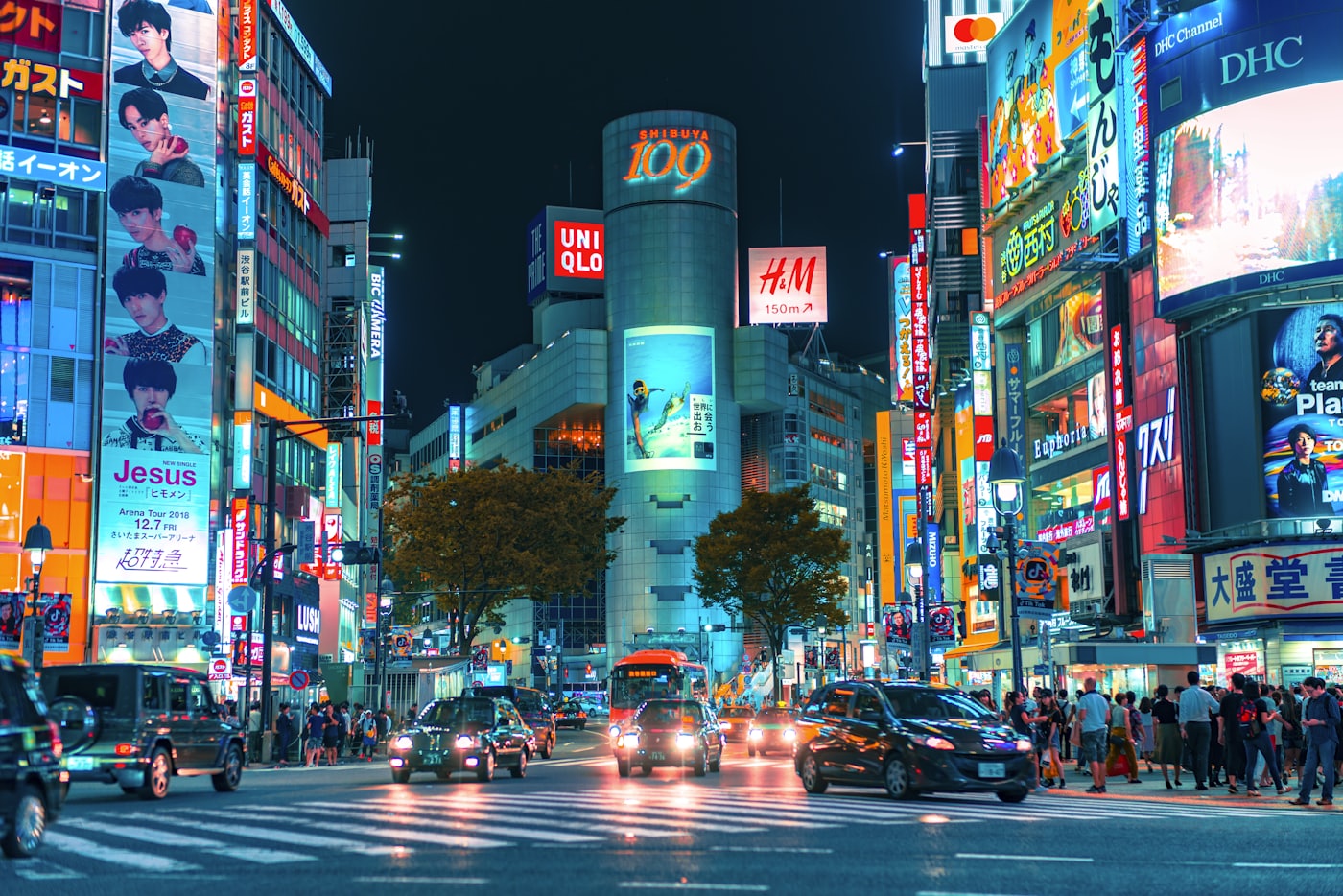
09:30 — Meet your private guide in the lobby for a half-day orientation (about 3.5 hours). You'll visit the tranquil forested approach to Meiji Shrine (about 1 hour), walk the youthful fashion streets of Harajuku and elegant Omotesandō (about 45 minutes), and end at the famous Shibuya Crossing and the Hachikō dog statue. Your guide will also show you, hands-on, how to read the train system — this pays off all week.
EATLunch (around 13:00) — your guide will point you to a good local spot before saying goodbye. Try a rice bowl (donburi) or hand-rolled soba.
Afternoon — free. Some ideas: the digital-art wonderland of teamLab Planets (allow 2 hours; pre-booked entry if you added it), the serene garden of Shinjuku Gyoen (1.5 hours), or simply exploring the backstreets of Shibuya.
EVENINGEvening free. For atmosphere, the tiny lantern-lit bars of Shinjuku's Golden Gai or the yakitori smoke of Omoide Yokochō ('Memory Lane') are unforgettable — go early, around 18:00, to get a seat.
Day 4 Old Tokyo & the River
Tokyo
A full free day. Our suggested route traces the city's older, eastern side — temples, markets, gardens and a river cruise — but follow your mood.
08:30 — Leave the hotel after breakfast. Take the train to Asakusa (30–40 min depending on your hotel).
09:15 — Sensō-ji, Tokyo's oldest temple. Walk up the Nakamise shopping street (great for souvenirs and street snacks) to the great red lantern and the temple hall. Spend about 1.5–2 hours here, arriving early enough to beat the worst crowds.
EATLunch — this is tempura country. Asakusa has famous old tempura houses; alternatively grab melon-pan (sweet bread) and a matcha soft-serve from the street stalls if you want to keep moving.
TRAIN / TRANSFEREarly afternoon — hop on a Sumida River cruise from Asakusa pier down to Hamarikyū Gardens or Odaiba (about 40 minutes on the water). It's a restful way to see the city from a new angle.
Mid-afternoon — if you sailed to Hamarikyū, spend an hour in this beautiful old feudal garden with skyscrapers behind it, and take tea in the floating teahouse. Then it's a short walk or ride to Ginza for window-shopping among the flagship stores (1–2 hours).
EVENINGTonight is special: a table has been reserved for you at a classic izakaya (booked on your behalf — the kind of place that doesn't take foreign reservations). Details are in your wallet. Go hungry and order broadly — this is Japanese dining at its most convivial.
Day 5 Tokyo, Your Way — or a Day Trip
Tokyo / optional day trip
Your second free day, and the natural day for a bigger excursion if you added one.
OPTIONIf you booked an optional day trip (Mt Fuji & Kawaguchiko, Nikkō, Kamakura, or a sumo experience), today is the day — see your separate optional-tour sheet for its own timings. If not, here is a self-paced Tokyo day:
09:30 — A slower start. Begin in Ueno: the park holds several of Japan's best museums (the Tokyo National Museum is superb — allow 2 hours) plus a lively zoo.
EATLunch — dive into Ameyoko, the buzzing market street under the railway tracks near Ueno, for cheap and delicious street food.
Afternoon — choose your Tokyo: Akihabara for electronics and anime culture, the booksellers' district of Jimbōchō, or the trend-setting boutiques of Daikanyama and Nakameguro.
EVENINGEvening free. Consider a quieter neighbourhood dinner tonight — you have an early-ish start tomorrow and a change of scene.
Day 6 Into the Mountains — Hakone
Tokyo → Hakone
Rail pass day one. You trade the metropolis for hot springs, mountain air and — on a clear day — Mt Fuji.
OPTIONYour main luggage was collected this morning (or last night) and is on its way to Kyoto. Travel today with just your overnight bag.
09:00 — Breakfast, then to the station. Your JR Pass activates today.
TRAIN / TRANSFERMid-morning — shinkansen from Tokyo to Odawara (about 35 minutes on a Hikari or Kodama; your reserved seats are noted). At Odawara you switch to the Hakone Free Pass network — your circuit ticket is included.
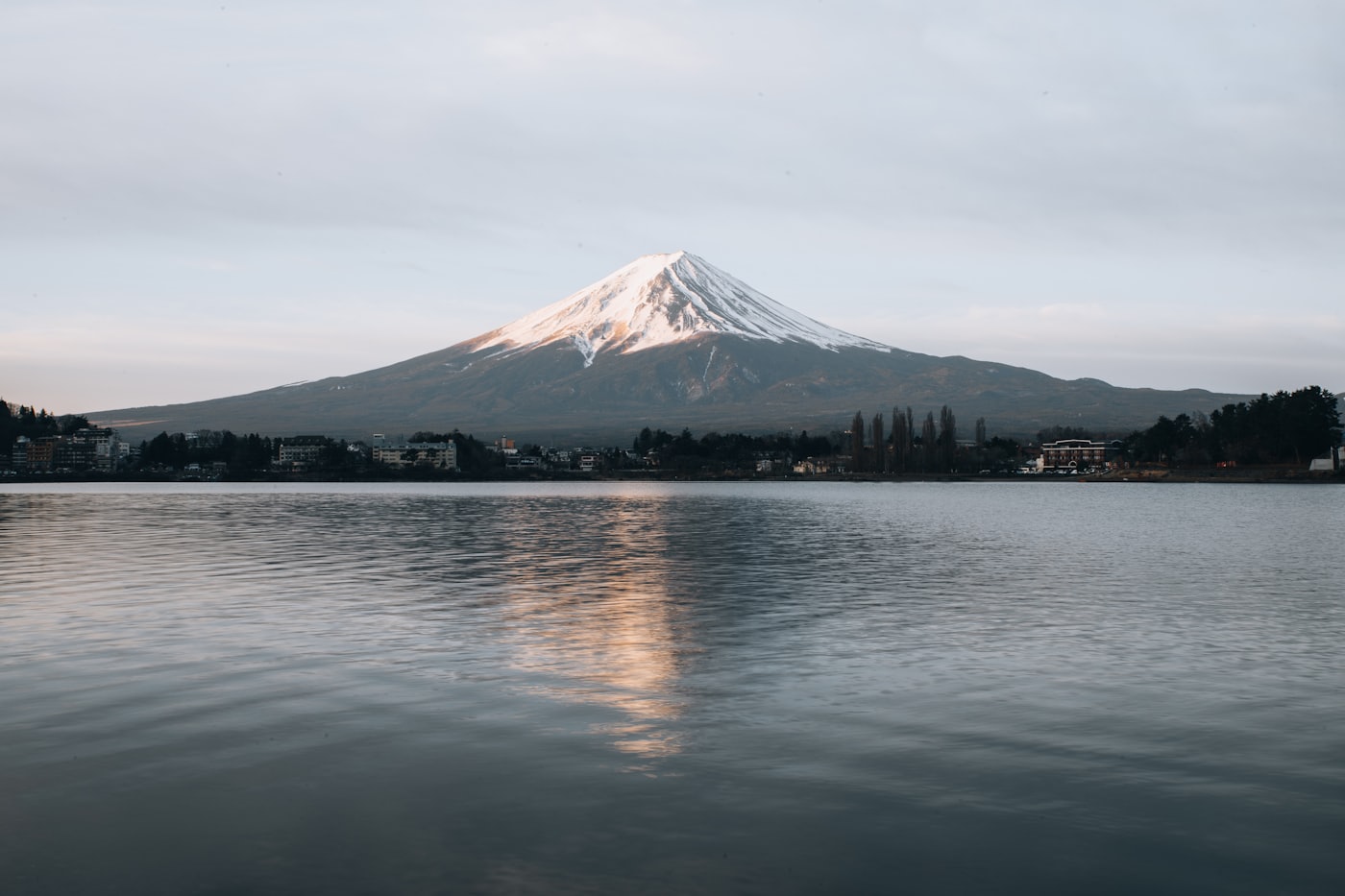
The Hakone loop is a joy: the little Tozan mountain railway that switchbacks up the slope, a cable car, then the ropeway gondola soaring over the steaming volcanic valley of Ōwakudani (buy a black egg, boiled in the sulphur springs — legend says it adds seven years to your life), and finally a replica pirate ship across Lake Ashi. On a clear day, Fuji reflects in the water. Take it slowly — the whole circuit with stops is a relaxed 3–4 hours.
EATLunch en route — there are restaurants at Ōwakudani and around Lake Ashi. Try the local mountain vegetables or a warming bowl of soba.
Late afternoon — arrive at your ryokan (traditional inn). This is a highlight of the whole trip. Change into the provided yukata robe, and before dinner, soak in the onsen (hot-spring bath). Your guide sheet explains onsen etiquette simply; if you have tattoos, you have a private bath option — just ask at reception.
EVENINGDinner is a multi-course kaiseki feast served in the traditional style, included tonight. Eat slowly. Sleep on futons laid out on tatami. This is the Japan of the imagination.
Day 7 Hakone to the Old Capital
Hakone → Kyoto
A slow morning in the mountains, then the bullet train west to Kyoto and your first taste of Gion at dusk.
Morning — no rush. Take a final onsen soak and a Japanese breakfast. If there's time, the vermilion torii gate of Hakone Shrine stands right on the lake shore and makes a beautiful short walk (30–45 min).
TRAIN / TRANSFERAround midday — return to Odawara and board the shinkansen to Kyoto (about 2 hours; reserved seats). Sit on the right-hand side (seats D/E) heading west for the famous fleeting view of Mt Fuji about 40 minutes in — have your camera ready around Shin-Fuji station.
Mid-afternoon — arrive Kyoto. Your suitcases are already at the hotel. Check in and freshen up.
EVENING18:00 — A short guided twilight walk through Gion, the geisha district (about 1.5 hours). Lantern-lit wooden teahouses, the chance of glimpsing a geiko or maiko hurrying to an appointment, and the atmospheric Shirakawa canal. Your guide explains the etiquette and the history, and leaves you at a reserved dinner spot.
EATDinner in Gion — a reserved table awaits (kaiseki-style at the Select tier; a characterful local spot at Comfort).
Day 8 Kyoto's Golden Morning
Kyoto
An early private start beats the crowds to Kyoto's two most photographed sights, then the afternoon is yours.
07:15 — An early breakfast (or a takeaway coffee). Worth it, we promise.
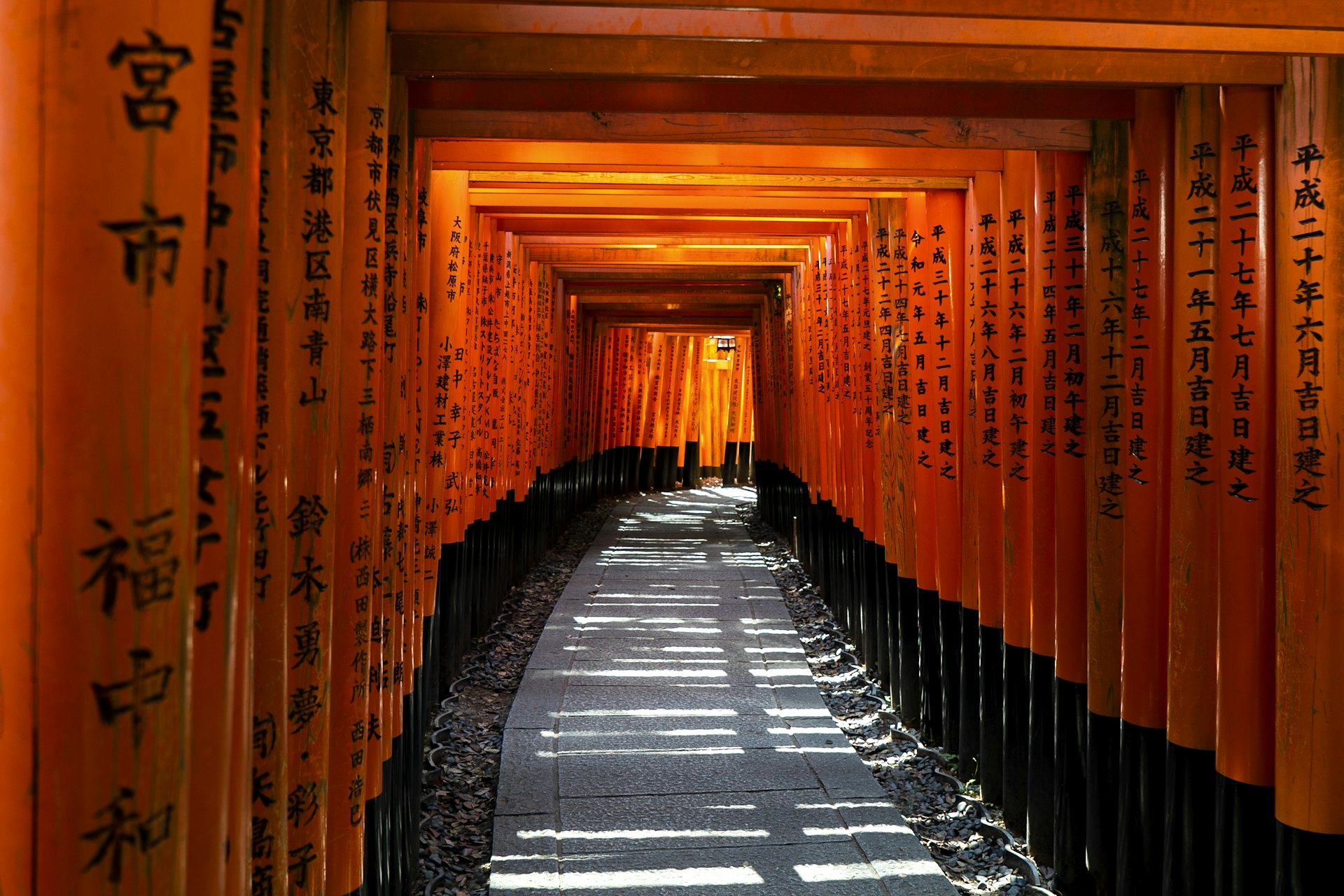
07:30 — Your private guide collects you. First stop, Fushimi Inari Shrine and its endless tunnels of vermilion torii gates climbing the mountain. Arriving now means you photograph them almost empty — by 10:00 it is shoulder-to-shoulder. Spend about 1.5 hours; you don't need to climb the whole mountain, the first 20 minutes uphill gives you the classic views.
TRAIN / TRANSFERAcross town to Arashiyama (your guide handles the trains).
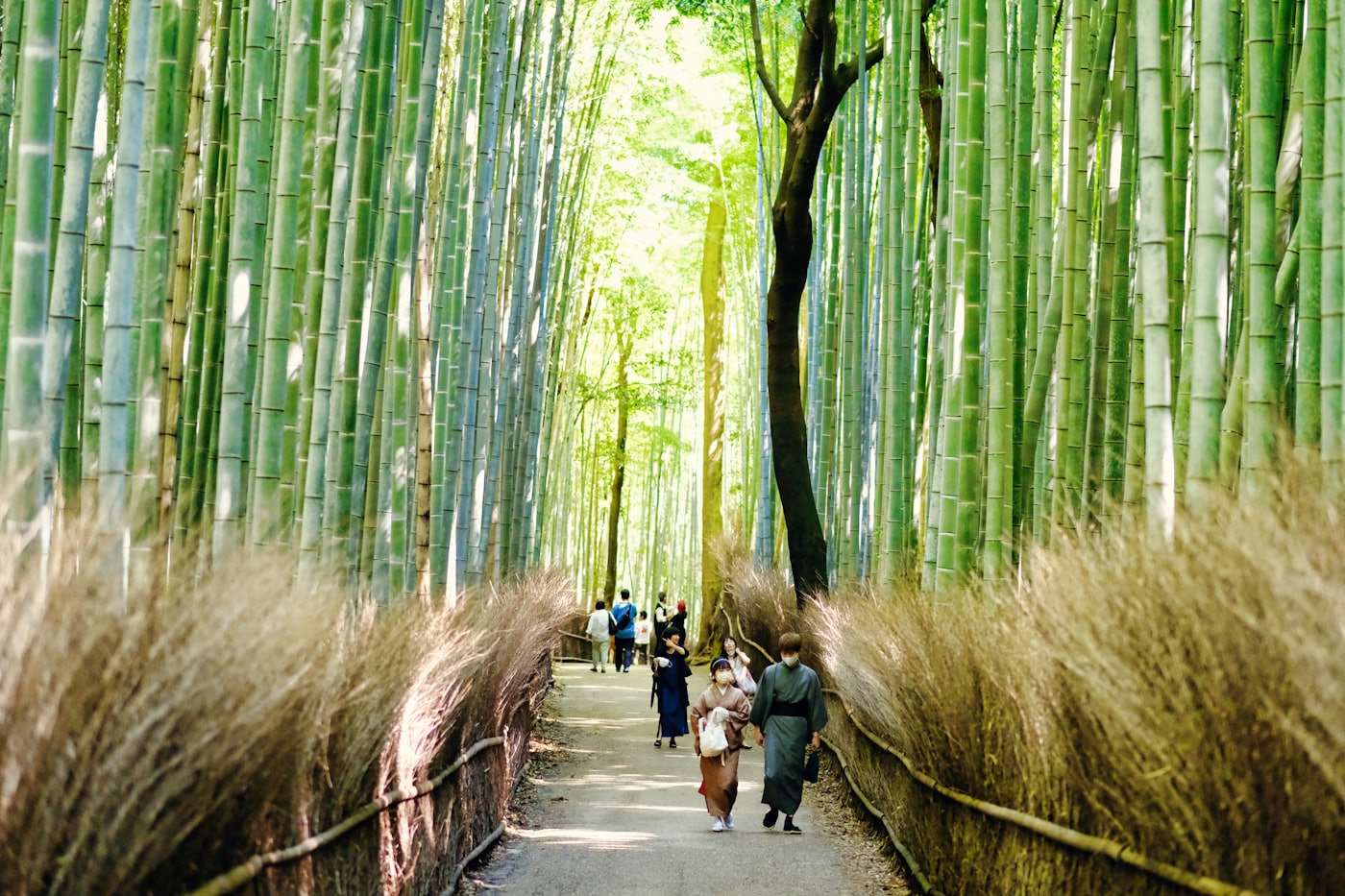
Around 10:00 — the Arashiyama bamboo grove, best seen before the tour buses. Walk through the towering green corridor, visit the lovely Tenryū-ji temple and its garden, and stroll to the Togetsukyō 'Moon-Crossing' Bridge. About 1.5 hours. Your guide says goodbye around 11:00–11:30.
EATLunch in Arashiyama — try yudofu (hot tofu hotpot), a Kyoto specialty, or a bento by the river.
Afternoon — free. Ideas: the vast Nishiki Market ('Kyoto's Kitchen', a covered street of food stalls — 1 hour of delicious grazing), the temple-lined Philosopher's Path, or Kiyomizu-dera temple in the golden late-afternoon light with its lantern-lit approach streets (Sannenzaka and Ninenzaka).
EVENINGEvening free. Pontochō Alley — a narrow lane of restaurants along the river — is magical after dark.
Day 9 Kyoto at Leisure
Kyoto
A free day in the old capital. The classic choice is a half-day to Nara and its bowing deer; we also offer two quieter alternatives.
OPTIONOption A — Nara (our most popular):
TRAIN / TRANSFER09:00 — Train to Nara (about 45 min on the JR line, covered by your pass).
10:00 — Nara Park, where hundreds of tame deer roam free and bow for crackers (sold by vendors). Walk to Tōdai-ji, whose Great Buddha Hall is one of the world's largest wooden buildings and houses a colossal bronze Buddha. Continue to Kasuga Taisha, a shrine of a thousand bronze lanterns. Allow 3–4 hours; a relaxed half-day. Back in Kyoto by mid-afternoon.
OPTIONOption B — Matcha & tradition: take the train to Uji (30 min), Japan's green-tea capital, for the golden Byōdō-in temple (on the ¥10 coin) and a proper tea-tasting.
OPTIONOption C — Dress the part: rent a kimono for the day and stroll the preserved Higashiyama district and Kiyomizu-dera in style (rental shops arrange everything).
EVENINGTonight, a special counter dinner is reserved for you (Select tier and above) — sitting at the counter watching the chef work is one of Japan's great pleasures.
Day 10 Hiroshima & the Floating Shrine
Day trip to Hiroshima & Miyajima
A moving and beautiful full day west — the reason your rail pass pays for itself, and one of the trip's most memorable days.
07:30 — Early breakfast.
TRAIN / TRANSFER08:00–08:30 — Shinkansen Kyoto → Hiroshima (about 1h45 on a Nozomi; we have pre-paid the supplement so you take the fastest train). Reserved seats. Doze, or watch western Honshu slide by.
Late morning — arrive Hiroshima. Take the tram (or a short ride) to the Peace Memorial Park. The A-Bomb Dome, the Peace Memorial Museum (your tickets are pre-issued) and the Children's Peace Monument are sobering and profoundly worthwhile. Allow about 2.5 hours, at your own pace — this is a place to be quiet in.
EATLunch — Hiroshima's own style of okonomiyaki (a layered savoury pancake with noodles) is a must. Okonomi-mura, a building full of stalls, is the classic spot.
TRAIN / TRANSFEREarly afternoon — tram and a short JR ferry (covered by your pass) to Miyajima island — about 1 hour door to door.
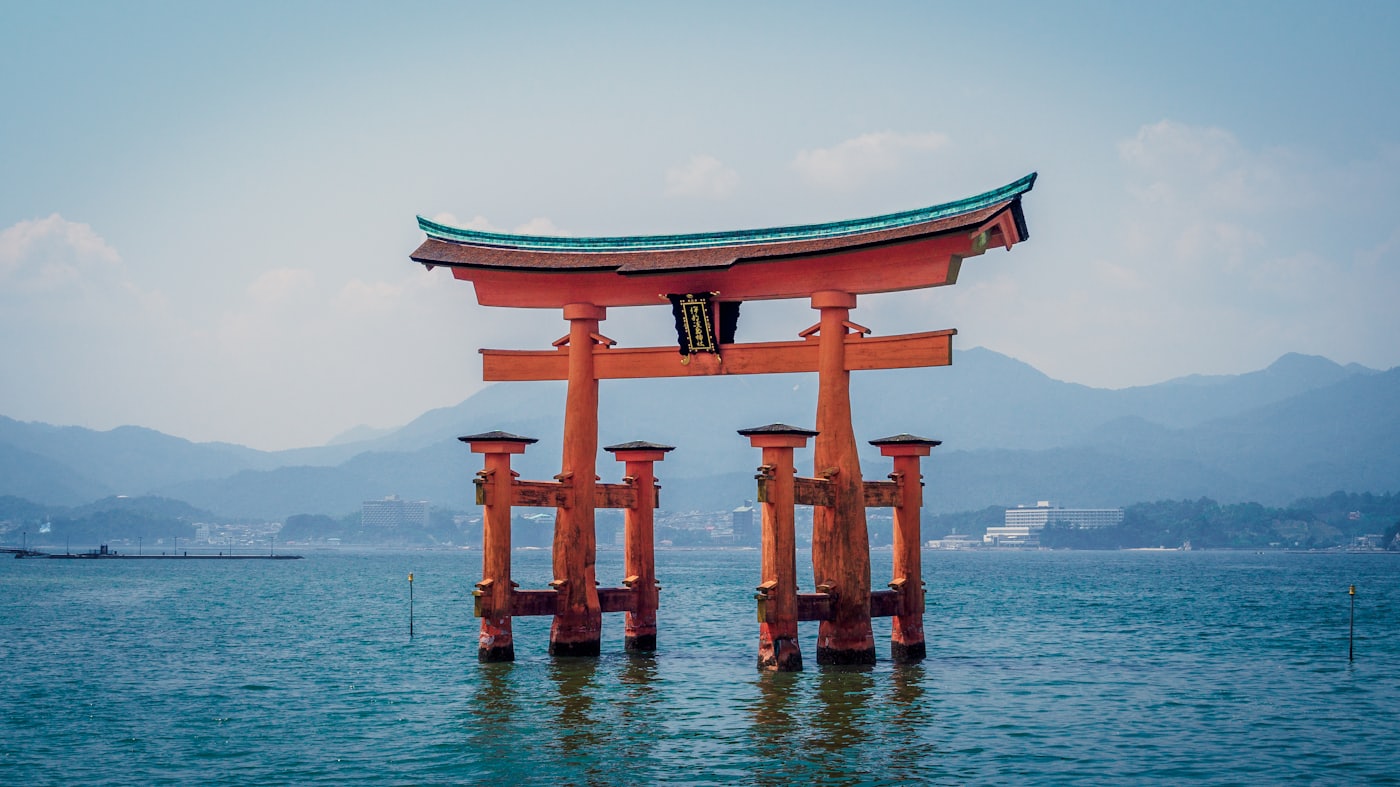
Miyajima — the great vermilion torii gate of Itsukushima Shrine appears to float on the sea at high tide. Wander the shrine, meet the island's own tame deer, sample grilled oysters and maple-leaf cakes (momiji manju) from the stalls, and if you have energy, ride the ropeway partway up Mt Misen for the view. Allow 2.5–3 hours.
TRAIN / TRANSFEREvening — return by ferry and shinkansen to Kyoto (reserved seats, arriving mid-to-late evening). A long day, but a golden one.
Day 11 Kyoto to Osaka — Last Tastes
Kyoto → Osaka
A final Kyoto morning, then the short hop to bold, boisterous Osaka and its legendary street food.
Morning — free in Kyoto. Last-minute shopping (your guide sheet lists what's actually worth buying — knives, tea, ceramics, wagashi sweets), or one more temple you missed.
TRAIN / TRANSFEREarly afternoon — a quick train to Osaka (about 15 min by shinkansen or 30 min on a rapid, covered by your pass). Drop bags at the hotel.
Afternoon — dive into Dōtonbori, Osaka's neon-lit food canyon along the canal. Use the tasting map in your guide: takoyaki (octopus balls), kushikatsu (fried skewers), and the giant mechanical crab and running-man Glico sign for photos. About 2–3 hours of happy grazing.
EATDinner — Osaka is 'the nation's kitchen'. Eat your way along Dōtonbori, or if you'd like a sit-down meal, okonomiyaki or kushikatsu are the local heroes.
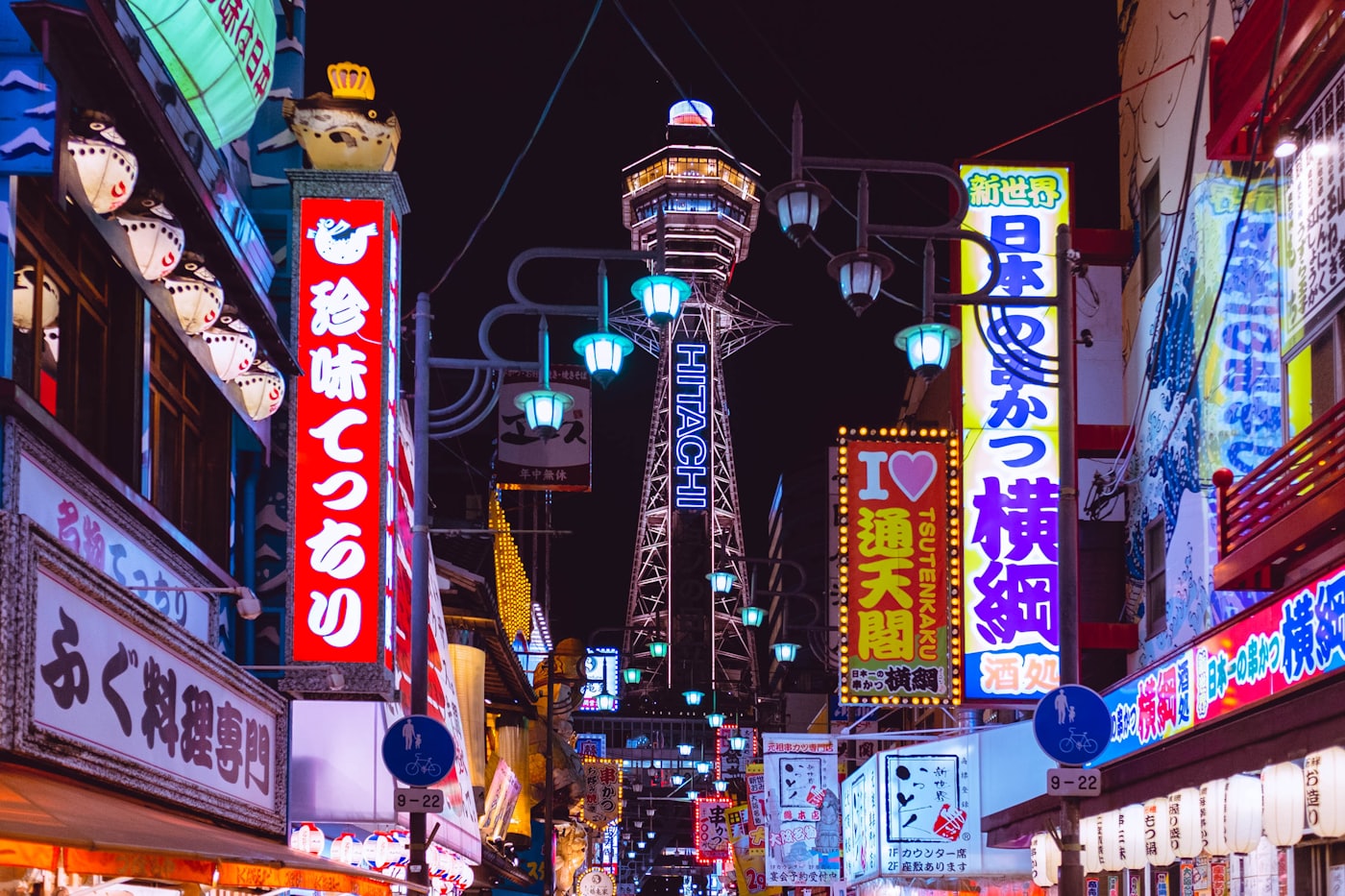
EVENINGA last Japanese evening. Namba and Shinsekai are lively; or ride to the Umeda Sky Building's 'Floating Garden' observatory for a farewell view.
Day 12 Sayōnara, Japan
Osaka → Athens
Your journey home, carrying a suitcase of memories and probably rather too many snacks.
Depending on your flight time, a last stroll or some final shopping at the hotel or airport.
TRAIN / TRANSFERTransfer to Kansai Airport (KIX) — about 50 min by train from central Osaka (route noted in your wallet). Aim to arrive 3 hours before your flight.
Fly KIX → Athens via your connection. Thanks to the time difference, you arrive home the same day. Otsukaresama deshita — well travelled!
Practical information
How to read this guide
This is a self-paced itinerary. Every day gives you a suggested wake-up and departure time, roughly how long to spend at each place, where and what to eat, and which train to catch — but nothing is rigid. If you linger an extra hour over coffee, simply shift everything later. The timings are built with comfortable margins; you will not feel rushed if you follow them, and you have room to wander if you don't.
Your rail pass
Your Nationwide JR Pass is activated on Day 6 and covers all your intercity trains through the end of the trip, including the Hiroshima day trip that makes the pass worthwhile. Seat reservations are already made for your long-distance trains — your seat numbers are on your travel wallet card. For the fastest Nozomi trains where we have pre-paid the supplement, this is noted on the day. Within cities, tap your Suica/ICOCA card.
Luggage
On Day 6 your main suitcases travel ahead by takkyubin courier from your Tokyo hotel directly to your Kyoto hotel — pack an overnight bag for one night in Hakone. Your cases will be waiting in Kyoto when you arrive.
A note on timing
Japan runs on time to the minute. A shinkansen listed at 09:03 leaves at 09:03. Aim to be on the platform 10 minutes early; it is a calm, pleasant experience, not a scramble. City trains run every few minutes, so those times are approximate.
Frequently Asked Questions
Is the Golden Route good for a first trip to Japan?
Yes. The Golden Route linking Tokyo, Hakone, Kyoto and Osaka is the ideal first-time Japan itinerary because it combines the modern capital, traditional culture, a hot-spring mountain stay and iconic sights like Fushimi Inari and Miyajima in one efficient rail-based loop.
Is the JR Pass worth it on this itinerary?
On this route, yes. The included Hiroshima and Miyajima day trip pushes the total point-to-point rail cost above the price of the 7-day nationwide JR Pass, so the pass saves money — unlike a simple Tokyo–Kyoto–Osaka trip, where individual tickets are cheaper.
How many days do you need for the Japan Golden Route?
Ten to eleven days is ideal. This 11-day / 9-night version allows four nights in Tokyo, a night in a Hakone ryokan, three nights in Kyoto and one in Osaka, with time for a Hiroshima day trip — unhurried but complete.
What is the best time of year for the Golden Route?
Spring (late March–April) for cherry blossom and autumn (November) for foliage are the most beautiful, but the route runs year-round. Avoid Golden Week (late April–early May) and mid-August Obon, when domestic travel peaks.
Photos: David Emrich (Unsplash), Jezael Melgoza (Unsplash), Luke Stackpoole (Unsplash), Duong Nguyen (Unsplash), Nicki Eliza Schinow (Unsplash), Nuno Antunes (Unsplash)